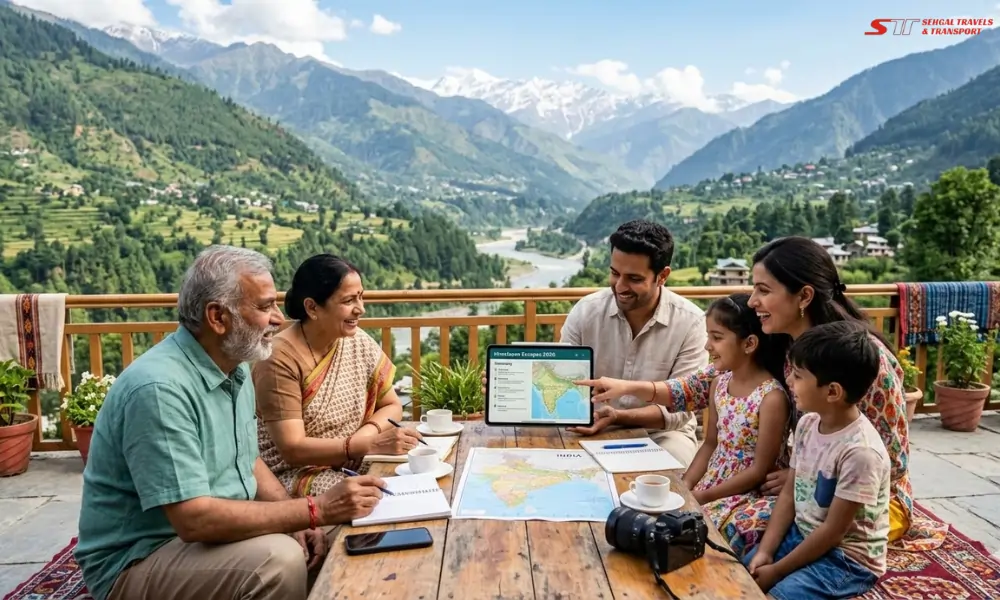
What’s the Smartest Way to Organise a Summer 2026 Family Trip Without Travel Hassles?
Summer 2026 is closer than you think – and for Indian families, the pressure to plan the perfect holiday is already building.
Introduction: Why Family Trip Planning Feels So Overwhelming
Every year, millions of Indian families dream of that one unforgettable summer getaway, a trip where the kids are excited, the elders are comfortable, the budget stays intact, and nobody ends up arguing at the airport. But between booking flights, coordinating hotel check-ins, managing train reservations, and packing for different weather zones across India, the planning phase alone can drain the joy out of travelling before you even leave home.
Sound familiar?
The truth is, most family trip stress does not come from travel itself; it comes from poor planning, last-minute decisions, and not knowing what to expect. Whether you are planning a hill-station escape to Shimla, a heritage circuit through Rajasthan, a spiritual journey to Varanasi, or a coastal retreat in Kerala, the common challenges include budget mismanagement, accommodation mismatches, transportation gaps, and itinerary overload.
This guide is here to change that. Whether you are a first-time planner or a seasoned family traveller, these smart, practical strategies, including choosing the right tempo traveller on rent for your group size, will help you build a smooth, stress-free, and genuinely enjoyable Summer 2026 family holiday anywhere in India.
Understanding the Summer 2026 Travel Landscape in India
Why Summer 2026 Demands Early Planning
Post-pandemic travel in India has surged dramatically. Domestic tourism has bounced back stronger than ever, with destinations like Manali, Ooty, Coorg, Andaman Islands, and Spiti Valley receiving record footfall each summer season. This surge means one thing for families: availability runs out fast.
For Summer 2026, which spans roughly April through July, the smart traveller starts planning in January or February at the latest. Hotels near popular hill stations get booked out months in advance. Volvo bus services, train berths on popular routes like Delhi to Shimla or Chennai to Ooty, and premium resort slots disappear quickly during school vacation windows.
Key seasonal factors to consider:
- April–May: Ideal for hill stations, North-East India, and Himalayan circuits. Avoid coastal areas due to rising humidity.
- June–July: Monsoon begins in South and West India. Kerala, Goa, and the Konkan Coast transform beautifully but require weather-ready itineraries.
- School Holidays: Most Indian school boards declare summer vacations between mid-April and mid-June, making this the peak demand window for family-friendly destinations.
Understanding when to go is just as important as where to go.
Most Common Pain Points Indian Families Face While Travelling
Before solving a problem, we must name it clearly. Here are the most frequently reported travel hassles among Indian families:
1. Budget Overruns Unplanned expenses from auto-rickshaw overcharging to surprise entry fees at monuments eat into the family budget silently. Without a realistic per-day spend estimate, many families return home financially stressed.
2. Accommodation Mismatch Booking a hotel online that looks nothing like its photographs is a painfully common experience. Families with elderly members or young children need specific amenities: ground-floor rooms, attached bathrooms, hot water availability, and safe neighbourhoods.
3. Transport Coordination Chaos: Managing multiple modes of transport, flights, trains, cabs, and local buses across different cities without a consolidated plan leads to missed connections and exhausting layovers.
4. Itinerary Overload: Trying to cover too many destinations in too few days leaves every family member tired rather than refreshed. Over-packed itineraries are one of the top reasons holiday memories turn stressful.
5. Language and Local Navigation Barriers Moving through states with different languages, such as Tamil Nadu, Karnataka, and Goa, in a single trip can be disorienting without local guidance or prior research.
Smart Strategies to Organise Your Family Trip Like a Pro
Step 1 — Define Your Travel Priorities as a Family
Before opening any booking website, sit together as a family and answer three questions:
- Who is travelling? (Ages, health needs, mobility concerns, dietary preferences)
- What kind of experience do you want? (Adventure, relaxation, cultural immersion, nature, pilgrimage)
- What is the realistic budget? (Including travel, stay, food, sightseeing, and emergency buffer)
These answers form the foundation of every decision that follows. A family travelling with a 70-year-old grandparent needs a very different itinerary than one with three teenagers who want trekking and rafting.
Step 2 — Choose the Right Destination for Your Family Profile
India offers an extraordinary variety of summer destinations, and the right choice depends entirely on your family’s profile.
For Families with Young Children (Ages 3–10):
- Ooty and Kodaikanal (Tamil Nadu) – cool weather, toy train rides, botanical gardens
- Mussoorie and Nainital (Uttarakhand) – lake activities, cable cars, short nature walks
- Coorg (Karnataka) – coffee estates, waterfalls, mild adventure activities
For Families with Teenagers:
- Manali and Solang Valley (Himachal Pradesh) – skiing, paragliding, river crossings
- Spiti Valley (Himachal Pradesh) – remote Buddhist monasteries, stark Himalayan landscapes
- Andaman Islands – snorkelling, scuba diving, pristine beaches
For Multi-Generational Families (with Elders):
- Varanasi and Prayagraj (Uttar Pradesh) – spiritual significance, manageable pace
- Udaipur and Jaipur (Rajasthan) – royal heritage, comfortable hotel infrastructure
- Munnar (Kerala) – scenic tea gardens, cool climate, well-developed tourism facilities
For Budget-Conscious Families:
- McLeod Ganj and Dharamshala (Himachal Pradesh)
- Rishikesh (Uttarakhand) – yoga, riverside camps, budget-friendly guesthouses
- Hampi (Karnataka) – UNESCO heritage ruins, extremely affordable, unique character
Step 3 — Build a Realistic, Breathing Itinerary
A well-crafted family itinerary follows one golden rule: leave at least one completely unscheduled half-day per destination.
This buffer time absorbs delays, allows spontaneous exploration, and gives children and elders rest without derailing the overall plan. Here is a simple structure that works:
- Day 1: Arrival + local orientation + light evening stroll
- Days 2–3: Core sightseeing (2–3 major attractions per day, not more)
- Day 4: Local market, cuisine experience, cultural activity
- Day 5: Departure or transit to next destination
Avoid booking activities back-to-back with no transit gaps. Real travel involves waiting, resting, and sometimes just sitting with a chai, and that is perfectly fine.
Step 4 — Master the Art of Smart Booking
Book Accommodation First, Then Transport. Always secure your stay before finalising travel dates. This is especially critical for popular summer destinations. Use trusted platforms, read recent guest reviews specifically mentioning family stays, and confirm amenities like parking, Wi-Fi, and kitchen access (useful for families with infants).
Train Travel Tips for Indian Families. Indian Railways remains the most family-friendly, cost-effective long-distance travel option. Book in AC 2-Tier or AC 3-Tier for comfort. Use the IRCTC app to set Tatkal alerts and check PNR status regularly. For families with elderly members, request lower berths at the time of booking.
Flight Booking Strategy Book domestic flights at least 6–8 weeks in advance for Summer 2026. Mid-week flights (Tuesday, Wednesday) tend to be cheaper than weekend departures. Always carry a printed copy of boarding passes when travelling through smaller regional airports.
Local Transport Pre-Arrangement. In destinations like Shimla, Ooty, and Manali, pre-booking a local cab operator for the duration of your stay saves enormous time and negotiation stress. Many reputable local operators offer full-day rates that work out more economically than per-trip hiring.
Step 5 — Pack Smart for Indian Summer Conditions
Packing for an Indian summer family trip requires balancing weather variability with luggage practicality.
- Hill Stations: Light woolens, windcheaters, comfortable walking shoes, sunscreen (UV intensity is high at altitude)
- Coastal Destinations: Breathable cotton clothes, swimwear, waterproof sandals, insect repellent
- Heritage Cities: Modest clothing for temple visits, comfortable flat footwear, a good sunhat
- Universal Essentials: ORS sachets, a basic first-aid kit, children’s medications, a universal adapter, a portable charger, and offline maps downloaded on your phone
Turning a Good Trip into a Great Memory
The Role of a Trusted Travel Partner
Even the most meticulous self-planner can benefit from expert local knowledge, especially when travelling to lesser-known destinations or managing large family groups. A reliable travel consultant does more than just book tickets; they anticipate problems before they arise, suggest alternatives when plans fall through, and provide that crucial on-ground support that no app can replicate.
Manage Expectations and Create Space for Imperfection
The most important mindset shift for stress-free family travel is this: not everything will go according to plan, and that is completely acceptable.
A delayed bus in Manali might lead you to discover a beautiful local dhaba. An unexpected rain shower in Coorg might turn into your children’s favourite travel memory. The families who enjoy travel the most are not the ones with perfect itineraries; they are the ones who stay flexible, stay present, and choose to find the joy in the unexpected.
Frequently Asked Questions (FAQ)
Q1. How early should Indian families start planning a Summer 2026 trip?
A: Ideally, begin planning by January–February 2026. Popular hill station accommodations and train berths fill up fast during April–June school vacation periods.
Q2. Which are the best summer destinations in India for families with elderly members?
A: Destinations with well-developed infrastructure and a moderate pace, such as Udaipur, Munnar, Varanasi, and Ooty, work very well for multi-generational families, including senior citizens.
Q3. What is the average budget for a 7-day family trip within India?
A: A comfortable 7-day trip for a family of four within India typically ranges between ₹60,000 to ₹1,20,000, depending on destination, accommodation category, and mode of transport chosen.
Q4. Is it safe to travel to Himalayan destinations like Spiti or Ladakh with children?
A: Yes, with proper acclimatisation planning. Children above the age of 8 generally handle altitude well if you ascend gradually, stay hydrated, and avoid strenuous activity on arrival days.
Q5. How do I avoid tourist traps and overcharging at popular Indian destinations?
A: Research standard auto and cab fares before arrival using apps like Ola or local travel forums. Book reputed restaurants in advance using Zomato or Google Maps reviews. Always confirm pricing before consuming or using any service.
Q6. What documents should a family carry while travelling domestically in India?
A: Aadhar card, PAN card, or voter ID for adults. For children, a school ID or birth certificate is useful. Always carry printed and digital copies of all hotel and transport bookings.
Final Thought: Your Summer 2026 Trip Starts With One Smart Decision
A memorable family holiday is not about spending the most money or visiting the most places. It is about choosing wisely, planning thoughtfully, and showing up with the right expectations.
India, with its staggering diversity of landscapes, cultures, climates, and cuisines, is genuinely one of the greatest family travel destinations in the world. From the snow-dusted peaks of Himachal Pradesh to the coconut-fringed backwaters of Kerala, from the golden dunes of Rajasthan to the mist-covered tea estates of Coorg, there is a perfect summer story waiting for every family.
If you are looking for curated family travel experiences across Indian destinations, Sehgal Travels offers personalised trip planning and group tour packages that take the guesswork out of family holidays from Rajasthan’s royal circuits to Kerala’s backwater retreats.
Start early. Plan smart. Travel with heart.
If you would like expert guidance on building your Summer 2026 family itinerary across India, feel free to reach out and explore what is possible for your family’s next great adventure.

Recent Posts

Famous Dussehra Celebrations in North India: Best Places to Visit

Rajasthan in October: Weather, Places to Visit & Complete Travel Guide