Why Leh Ladakh is India’s Most Popular Summer Destination
Every summer, millions of Indians face the same question: where do we go this year? The beaches feel crowded. The hill stations feel predictable. And then someone in the group says, “What about Ladakh?” and suddenly, everything changes.
Leh Ladakh is not just a travel destination. It is an experience that reshapes how you see the world. Sitting at an altitude of over 3,500 metres above sea level in the northernmost part of India, this cold desert landscape has become the most talked-about summer destination in the country. Whether you are a solo backpacker, a family looking for something extraordinary, or a couple planning a honeymoon unlike any other, Ladakh has a way of speaking directly to your soul. For travellers planning a seamless journey, choosing a reliable tour and travel company can make the entire experience more comfortable and well-organized.
But why has this remote, rugged land become India’s number one summer escape? Let us break it down in full detail.
Understanding Why Summers in Ladakh Are So Special
Most people do not realise that Ladakh is actually a cold desert. Unlike the snowy image many carry in their minds, summer in Ladakh means clear blue skies, dry sunny days, and temperatures that are pleasant rather than harsh. From June to September, the region becomes fully accessible, with most mountain passes opening up and roads becoming safe for travel.
The average summer temperature in Leh town ranges between 15 degrees Celsius during the day and 5 degrees Celsius at night. This makes it a perfect escape from the scorching heat of plains like Delhi, Jaipur, and Chandigarh, where temperatures cross 45 degrees Celsius every May and June.
This contrast alone drives hundreds of thousands of visitors to book Ladakh tour packages every year. The relief from heat, the purity of the air, and the dramatic scenery make Ladakh the ultimate summer retreat within India.
The Landscape: Nothing Else Looks Like This in India
One of the strongest reasons Leh Ladakh dominates summer travel searches in India is its unique landscape. There is no other place in the country that looks remotely similar.
Towering barren mountains in shades of brown, red, and golden surround vast open valleys. The Indus River and Zanskar River cut through the terrain, creating dramatic river confluences. Monasteries cling to cliffsides. Villages sit at altitudes where most trees refuse to grow.
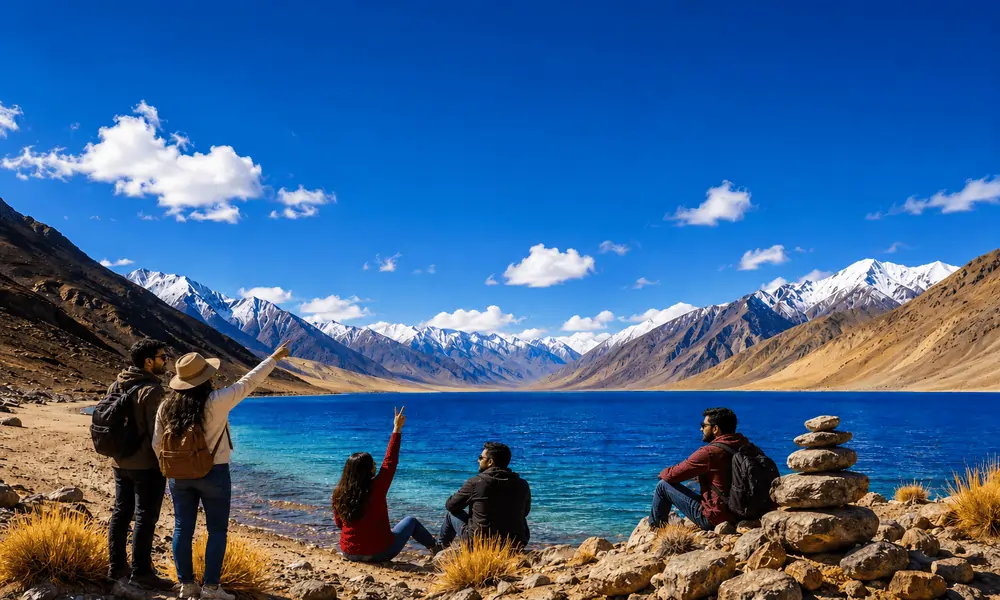
The famous Pangong Tso lake, stretching across 134 kilometres between India and China, changes colour from blue to green to turquoise depending on the time of day and angle of sunlight. After the film 3 Idiots was partly filmed there in 2009, search interest for Pangong Lake shot up across India and has never truly settled back down.
Nubra Valley, reached via the Khardung La pass, which stands at approximately 17,582 feet, offers a surreal sight of dunes and double-humped Bactrian camels sitting between snow-capped peaks. This combination of desert and mountain in one frame is something that India’s mainstream hill stations simply cannot offer.
Adventure Tourism: The Biggest Pull for Young Travellers
Ladakh has quietly become the adventure tourism capital of India. The list of activities available here is longer than almost any other destination on the subcontinent.
Motorbiking from Manali to Leh on the Manali Leh Highway is considered one of the greatest road trips in Asia. The route crosses five high-altitude passes, including Rohtang Pass, Baralacha La, Nakee La, Lachung La, and Tanglang La. For motorcycle enthusiasts across India, this is a bucket list journey that defines summer travel.
River rafting on the Zanskar River offers grade three to grade four rapids suitable for both beginners and experienced rafters. Trekking routes like the Markha Valley Trek, Stok Kangri Trek, and the legendary Chadar Trek in winter draw thousands of trekkers who want something more challenging than the standard Himalayan trails in Himachal Pradesh or Uttarakhand.
Mountain biking, rock climbing, archery competitions at local festivals, wildlife spotting in Hemis National Park, where snow leopards are occasionally sighted, and stargazing at night in one of India’s darkest skies, all combine to make Ladakh a destination where no two days feel the same.
Culture and Spiritual Energy: A Different India Entirely
Ladakh’s culture is deeply rooted in Tibetan Buddhism, and this gives the region a spiritual quality that is genuinely rare in Indian travel. Over 30 ancient monasteries dot the landscape, each holding centuries of art, prayer, and tradition.
Hemis Monastery, the largest in Ladakh, hosts the Hemis Festival in June or July each year. Masked dance performances, traditional music, and colourful ceremonial dress turn the monastery courtyard into a living cultural spectacle. Thiksey Monastery, often compared to the Potala Palace in Lhasa, is one of the most photographed buildings in all of India.
The people of Ladakh, largely from Tibetan and Dardic heritage, have a warmth and gentleness that many travellers describe as deeply calming. The pace of life here is slow. Phones lose signal in many areas. There are no shopping malls. And this disconnection from the noise of modern India is, paradoxically, one of the greatest draws for urban visitors.
Practical Reasons Ladakh Works So Well as a Summer Destination
Beyond the beauty and adventure, there are very practical reasons why Leh Ladakh fits perfectly into Indian summer travel plans.
The summer window of June to September lines up almost exactly with school holidays and office leave seasons across India. Families who want to travel together but avoid peak monsoon flooding in destinations like Kerala, Goa, or Coorg find Ladakh ideal because it falls in a rain shadow zone and receives very little rainfall even during monsoon months.
Flight connectivity has improved significantly over the past decade. Leh’s Kushok Bakula Rimpochhe Airport now receives regular flights from Delhi, Mumbai, Srinagar, and Jammu. The airport sits at about 3,256 metres, making it one of the highest commercial airports in the world, and flights here offer some of the most breathtaking aerial views of the Himalayas that exist in Indian aviation.
Road access via the Manali Leh Highway from Himachal Pradesh and the Srinagar Leh Highway from Jammu and Kashmir gives travellers flexibility to combine multiple destinations into a single mountain journey.
Frequently Asked Questions About Ladakh in Summer
Q: Is Ladakh safe to visit in summer?
A: Yes, summer from June to September is the safest and most recommended time to visit Ladakh.
Q: Do I need a permit to visit Ladakh?
A: Indian citizens do not need an Inner Line Permit for Leh town or most standard tourist areas, but permits are required for protected zones like Nubra Valley, Pangong Lake, and Dah Drokpa village.
Q: Is altitude sickness a concern in summer?
A: Yes, altitude sickness, or Acute Mountain Sickness (AMS), can affect anyone who arrives at high altitude quickly.
Q: What is the best route to reach Ladakh?
A: Flying directly to Leh is the fastest option. For those who want the full road experience, the Manali Leh Highway is open from late May to early October
Q: How many days are needed to cover Ladakh properly?
A: A minimum of seven days is recommended to see Leh town, Pangong Lake, Nubra Valley, and the main monasteries without feeling rushed.
What Makes Ladakh Different From Other Indian Summer Destinations
Shimla, Manali, Mussoorie, Nainital, and Ooty are all beautiful. But they are increasingly crowded, commercialised, and similar in character. Ladakh offers something genuinely different: scale, silence, altitude, and a culture that feels untouched by the pace of modern India.
The proportion of first-time visitors who return to Ladakh within two or three years is noticeably high among Indian travellers. Travel communities across India frequently describe Ladakh as a place that is difficult to visit just once.
Plan Your Ladakh Journey the Right Way
Travelling to Leh Ladakh requires some planning, especially around acclimatisation, permits, and logistics. Working with experienced travel planners who understand the region’s terrain, seasons, and cultural nuances makes a significant difference to the quality of your trip.
If you are considering a Ladakh trip this summer, Sehgal Travels offers well-structured Ladakh group tour packages designed specifically for Indian travellers, with routes covering Leh, Nubra Valley, Pangong Lake, and beyond.
The mountains are already calling. The only question is whether you are ready to answer.

Recent Posts
Rajasthan in October: Weather, Places to Visit & Complete Travel Guide

7 Historic Places Linked to Mahatma Gandhi to Visit in 2026