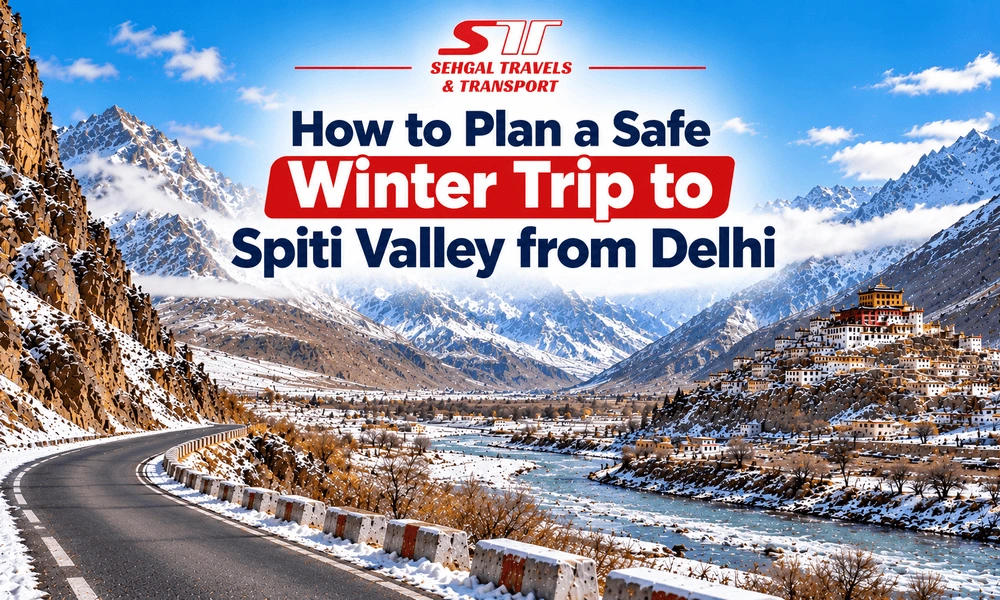
How to Plan a Safe Winter Trip to Spiti Valley from Delhi
Picture yourself travelling through mountains covered in snow, going past quiet villages and seeing the beautiful Himalayan landscape spread out around you. It is for this reason that Spiti Valley becomes such an exciting place to visit in the winter. Unlike the well-known hill stations crowded with tourists, Spiti provides peaceful surroundings, stunning scenery, and the opportunity to experience life in one of India’s most remote mountain areas.
Arranging a winter journey from Delhi to the Spiti Valley involves more preparation than that of a normal holiday, since the freezing temperatures, icy roads, scarce accommodation and sudden snowfalls can make travel difficult, particularly for people going there for the first time.
The best method for planning a winter trip to Spiti from Delhi is to take the Shimla–Kinnaur route, check the present state of the roads, select appropriate transport and leave extra days in case of delays. People travelling should also make preparations for the high altitude, the extreme cold, and the limited facilities.
This article will be of use to you if you are travelling with friends or if you are travelling with your family, as it will help you to understand the important points to take into account before starting your adventure in the Himalayas.
Why Visit Spiti Valley During Winter?
Spiti Valley becomes a completely different destination when winter arrives. The mountains turn white, frozen streams create beautiful landscapes, and small villages appear even more peaceful.
One of the biggest attractions is the absence of large tourist crowds. You can experience the quiet atmosphere of the region and enjoy photography without the usual rush.
Winter also offers an opportunity to learn about the local lifestyle. Residents adapt to harsh weather through traditional heating methods, seasonal food, and strong community connections.
However, visitors should remember that winter tourism comes with limitations. Some attractions may be inaccessible, restaurants can remain closed, and basic facilities may be difficult to find. Travellers planning a group trip from Delhi can explore transportation options with Sehgal Travels Delhi while ensuring that the vehicle and driver are suitable for winter mountain roads.
If you enjoy adventure and are comfortable with unpredictable conditions, Spiti can offer a memorable experience.
Quick Facts About a Winter Spiti Valley Trip
Before planning your itinerary, understand the basic travel requirements.
| Travel details | Important information |
| Starting destination | Delhi |
| Main winter route | Via Shimla and Kinnaur, subject to accessibility |
| Recommended duration | Around 8–10 days |
| Main winter months | December to February |
| Temperature | Can drop below -20°C in some areas |
| Main town | Kaza |
| Major challenges | Snowfall, altitude, icy roads, limited facilities |
| Travel priority | Safety and flexible planning |
These details provide general guidance. Actual temperatures, road accessibility, and travel duration depend on current conditions.
What Is the Best Time to Visit Spiti in Winter?
Winter conditions in Spiti generally begin developing in November and become more severe from December onwards.
November: Temperatures begin dropping, especially at night, and early snowfall may affect higher areas. It can be a suitable time for travellers who want to experience the beginning of winter before the harshest conditions arrive.
December: The region begins experiencing intense cold, and snowfall can affect roads. It may appeal to travellers interested in quiet winter scenery.
January: This is usually among the coldest periods. Frozen water supplies, slippery roads, and extremely low nighttime temperatures can make travelling challenging.
February: Snowfall can continue, and several routes may remain inaccessible. Travellers need flexible schedules and reliable local information.
March: Daylight hours increase, but snow and ice can still create dangerous driving conditions.
For first-time visitors, choosing dates based on current weather and road accessibility is more important than selecting a particular month.
Which Route Should You Take from Delhi to Spiti Valley?
Selecting the correct route is essential because not every road remains accessible during winter.
Delhi to Spiti via Shimla and Kinnaur
The usual winter approach follows:
Delhi → Chandigarh → Shimla → Narkanda → Rampur → Reckong Peo → Nako → Tabo → Kaza
This route allows travellers to gain altitude more gradually and avoids Kunzum Pass.
However, sections can become dangerous due to black ice, rockfalls, landslides, and snowfall. Even roads that are normally accessible may close temporarily.
Check the latest district administration updates before leaving Delhi and continue monitoring conditions throughout the journey.
Why Is the Manali Route Usually Closed?
The Manali–Kunzum Pass–Kaza road generally becomes inaccessible during the main winter season because of heavy snow.
Although the Atal Tunnel provides access towards Lahaul, it does not guarantee an open road to Spiti.
Never attempt an alternative mountain route without reliable local confirmation.
Choose the Right Vehicle for Winter Mountain Travel
Transportation is one of the most important parts of a winter Spiti trip. The journey involves long driving hours, narrow roads, sharp turns, and potentially slippery surfaces.
For families and groups, travelling together can make luggage management and coordination easier.
Travellers searching for a luxury tempo traveller on hire in Delhi may prefer spacious seating and comfortable interiors for the long journey. However, comfort alone does not make a vehicle suitable for winter mountain conditions.
Before confirming transportation, check the vehicle’s tires, heating system, ground clearance, snow-chain arrangements, and maintenance condition.
The driver should have experience handling difficult Himalayan roads. Some sections may require a locally operated high-clearance vehicle instead of a larger passenger van.
Always prioritise safety over convenience.
Book Accommodation Before Starting Your Journey
Finding accommodation during winter can be challenging because many hotels and guesthouses close temporarily.
Kaza and Tabo may have operating homestays, but availability should never be assumed.
Before booking, contact the property directly and ask about heating, warm bedding, meals, drinking water, electricity, and bathroom facilities.
Running water may freeze during extremely cold weather, so travellers should be prepared for basic arrangements.
Choosing accommodation with experienced local hosts can also help you receive practical information about nearby roads and weather conditions.
What Should You Pack for a Winter Spiti Trip?
Packing correctly makes a major difference when travelling through freezing mountain conditions.
Essential Winter Clothing
Carry thermal innerwear, insulated jackets, warm sweaters, waterproof gloves, woollen caps, thick socks, and winter boots with reliable grip.
Layering clothes is generally more practical than depending on one heavy jacket.
Sunglasses and sunscreen are also important because sunlight reflecting from snow can be intense.
Important Travel Essentials
- Personal medicines and a first-aid kit
- Power banks and charging cables
- Dry snacks and drinking water
- Flashlight and spare batteries
- Identification documents and emergency cash
- Offline maps and saved contact numbers
- Moisturiser and lip balm
Keep important supplies within easy reach during the journey.
Understand Altitude Sickness Before Visiting Spiti
Spiti Valley lies at a high altitude, and visitors may experience difficulty adjusting to the reduced oxygen availability.
Common symptoms of altitude sickness include headaches, dizziness, nausea, tiredness, and loss of appetite.
Gradual ascent and sufficient rest help reduce the risk, but they cannot completely prevent altitude-related illness.
Avoid strenuous activities immediately after reaching Kaza. If symptoms appear, stop ascending and seek medical advice.
Severe breathlessness, confusion, or difficulty walking requires urgent medical attention and descent.
Travellers with existing medical conditions should consult a healthcare professional before visiting.
Best Places to Explore in Spiti During Winter
Winter sightseeing should remain flexible because snowfall can make several attractions inaccessible.
Kaza: Experience the Peaceful Mountain Town
Kaza is Spiti’s main town and a practical base for exploring nearby areas.
Visitors can enjoy beautiful mountain views, local food, and the quiet atmosphere of a Himalayan settlement.
Key Monastery: Discover Buddhist Heritage
Key Monastery is one of the region’s most recognised landmarks.
Located on a hillside near Kaza, it offers impressive views of the surrounding mountains.
Visit only when the approach road is confirmed safe.
Tabo: Explore a Historic Village
Tabo is famous for its ancient Buddhist monastery and cultural heritage.
The village offers an opportunity to experience traditional architecture and peaceful surroundings.
Confirm road conditions and visitor arrangements before travelling.
Higher villages such as Kibber, Langza, and Komic may remain inaccessible during winter.
Keep Emergency Arrangements Ready
Unexpected weather can disrupt even a carefully planned trip.
Mobile connectivity may be unreliable, particularly in remote sections. Share your itinerary with someone at home and save important contact numbers offline.
Carry additional warm clothing, food, water, and emergency supplies in your vehicle.
Before travelling, check official road advisories and weather forecasts.
If authorities close a road, wait until it is reopened. Never pressure your driver to continue when conditions become unsafe.
How to Make Your Winter Journey More Comfortable
Small choices can make your whole trip better.
Start off by driving early so that you have sufficient daylight. Stop at regular intervals, have proper meals, and don’t rush from one place to another.
It is important to protect your phone and other electronic devices from extremely cold temperatures since batteries can lose their charge rapidly.
Observe the local customs, don’t litter, and heed the advice given by the residents since they know about the winter conditions in the area.
Most important of all is to realise that certain sightseeing itineraries may have to be altered.
Taking it easy usually makes the trip more enjoyable than attempting to see all the attractions.
Plan Your Group Journey with Experienced Travel Support
To arrange transportation for a long journey through mountainous terrain, it is necessary to have clear communication regarding the number of passengers, the luggage, the travel dates, and the overnight stops.
The best travel company in Delhi offers group rides for people starting from Delhi. You can talk about the vehicles they have, the route you need, and the travel plans that work for you before you book your trip.
When travelling to Spiti in the winter, you should always check that the vehicle is suitable, that the driver has relevant experience, that the local roads are accessible, and whether extra mountain transport is needed.
Frequently Asked Questions (FAQs)
Q: Is Spiti Valley safe to visit during winter?
A: Winter travel involves significant risks from snowfall, icy roads, freezing temperatures, and high altitude. Visit only when roads are accessible and suitable safety arrangements are available.
Q: Which route is suitable for Spiti from Delhi in winter?
A: The Shimla–Kinnaur route is generally the main winter approach. However, temporary closures can occur because of snow and landslides.
Q: Can families visit Spiti Valley in December?
A: Families can consider visiting, but extreme cold, altitude, and limited medical facilities require careful preparation, especially when travelling with children or older adults.
Q: Are hotels available in Spiti during winter?
A: Some homestays and guesthouses operate during winter, but many properties close seasonally. Confirm availability and heating arrangements before departure.
Final Thoughts
Taking a winter trip from Delhi to Spiti Valley provides the chance to explore snow-covered mountains, peaceful villages, and beautiful Himalayan scenery away from the usual tourist crowds.
The journey, however, requires careful preparation. Choosing the right route, allowing enough travel time, booking suitable accommodation, and preparing for freezing temperatures can help avoid unnecessary difficulties.
Always check the latest weather conditions, follow local advice, and keep your itinerary flexible. If a road becomes unsafe or an attraction becomes inaccessible, changing your plans is the sensible choice.
With proper preparation and responsible travel decisions, you can enjoy the remarkable beauty of Spiti Valley while keeping safety your top priority.
Explore the vehicle options and find suitable transportation for your journey. Make sure to confirm winter road accessibility and vehicle suitability before booking.

Recent Posts

How to Plan a Safe Winter Trip to Spiti Valley from Delhi

Famous Dussehra Celebrations in North India: Best Places to Visit