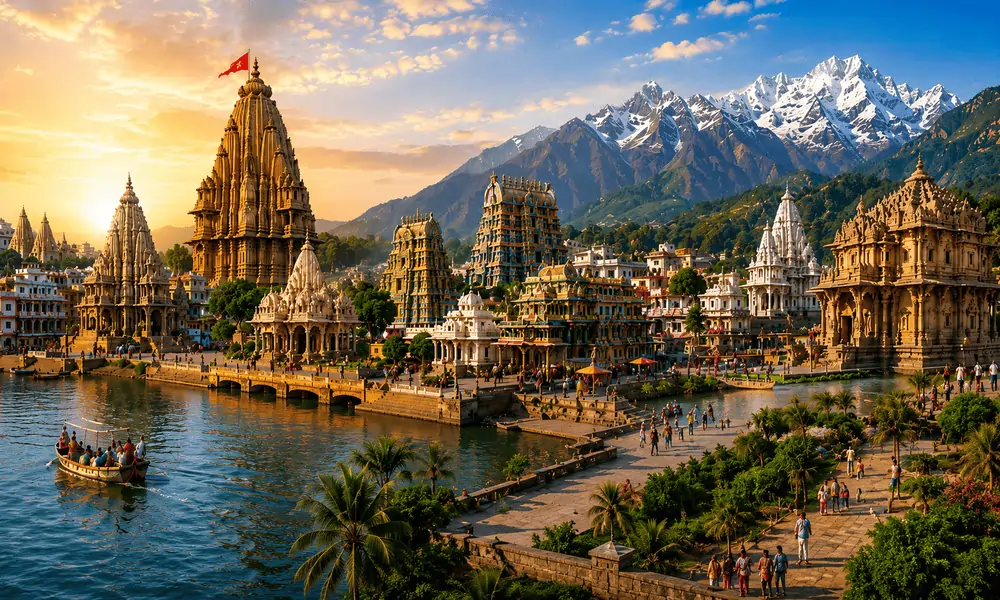
Complete Guide of the 12 Jyotirlingas: Temple Locations, Routes and Travel Planning
Planning a long religious trip across India can feel hard. Many people want to visit the sacred Shiva temples but do not know where to start. You might worry about finding the right train routes, booking clean hotels, or missing the special morning prayer times like the famous Bhasma Aarti. Planning a journey to all 12 Jyotirlingas requires careful thought because these temples are spread across different states, from the high mountains of the north to the ocean shores of the south.
This complete guide will help you solve these travel problems. We will look at why these temples are so important, where they are located, and how you can plan your routes easily. Whether you want to visit one temple over a weekend or plan a complete national tour, this guide covers everything you need.
Understanding the Spiritual Power of Jyotirlingas
Before packing your bags, it helps to understand what a Jyotirlinga is. In simple words, a Jyotirlinga is a place where Lord Shiva appeared as a fiery pillar of cosmic light. The word Jyoti means light, and Linga means sign or symbol. There are many Shiva temples in India, but these twelve are the most sacred because they hold the direct spiritual energy of the supreme god.
Devotees believe that visiting these holy sites cleans past sins and brings deep inner peace. Every temple has an ancient story, a unique natural setting, and a distinct energy. From a travel perspective, these temples also show the amazing beauty of India, taking you through deep forests, massive rivers, ancient caves, and grand coastal paths.
State-Wise Locations of the 12 Jyotirlingas
To plan your route without getting confused, it is best to see which temples sit in the same region. Here is the clear state-wise list of all twelve shrines across India:
- Gujarat: Somnath Temple and Nageshwar Temple
- Madhya Pradesh: Mahakaleshwar Temple and Omkareshwar Temple
- Maharashtra: Bhimashankar Temple, Trimbakeshwar Temple, and Grishneshwar Temple
- Uttarakhand: Kedarnath Temple
- Uttar Pradesh: Kashi Vishwanath Temple
- Jharkhand: Vaidyanath Baba Dham
- Andhra Pradesh: Mallikarjuna Temple
- Tamil Nadu: Rameshwaram Temple
Detailed Guide for Each Jyotirlinga: Location and Route
1. Somnath Jyotirlinga (Gujarat)
This is traditionally known as the very first Jyotirlinga on earth. The majestic temple stands right next to the Arabian Sea in Prabhas Patan near Veraval. The ancient story says the Moon God built this temple out of gold to thank Lord Shiva for freeing him from a dark curse. The temple was broken by invaders many times in history, but the deep faith of devotees rebuilt it every single time. A unique fact here is the Baan Stambh (arrow pillar), which points in a straight line over the ocean with no land area at all until Antarctica.
- Best Time to Visit: October to March when the sea breeze is cool.
- How to Reach: The nearest local railway station is Somnath station, which is just 2 kilometers away. The closest domestic airport is in Diu (around 85 kilometers away) or Rajkot Airport (around 200 kilometers away). You can easily take a local bus or private taxi from Ahmedabad or Rajkot.
2. Nageshwar Jyotirlinga (Gujarat)
Located on the route between Dwarka city and the Beyt Dwarka island, this temple holds a massive, beautiful statue of Lord Shiva that you can see from far away. The story from the Shiva Purana tells us that Lord Shiva appeared here to destroy a cruel demon named Daruka, who had trapped his local devotees. The place is also called Darukavanam because of the old forests that used to grow here.
- Best Time to Visit: September to March.
- How to Reach: Dwarka railway station is the nearest railhead, located about 16 kilometers from the temple. The nearest airport is Jamnagar Airport, which sits about 135 kilometers away. Regular local auto-rickshaws and rental cars run between Dwarka city and the temple daily.
3. Mahakaleshwar Jyotirlinga (Madhya Pradesh)
Situated in the ancient city of Ujjain on the banks of the holy Shipra River, Mahakaleshwar is unique because it is the only Jyotirlinga that faces the south direction. South is the direction of death, and Shiva is worshipped here as Mahakal, the Lord of Time and Death, who removes all human fears. The most sacred ritual here is the early morning Bhasma Aarti, where the holy stone is offered fresh ashes.
- Best Time to Visit: October to March, especially during the grand Mahashivratri festival.
- How to Reach: Ujjain Junction is a major railway station with direct trains from all over India. The nearest airport is Devi Ahilyabai Holkar Airport in Indore, which is about 55 kilometers away. Smooth four-lane highways connect Indore to Ujjain for quick taxi rides.
4. Omkareshwar Jyotirlinga (Madhya Pradesh)
This holy temple is located on a natural island called Mandhata in the middle of the sacred Narmada River. The most amazing feature is that the shape of the entire island looks exactly like the holy Hindu symbol “Om”. Pilgrims love to do the Omkareshwar Parikrama, which is a 7-kilometer walking path around the island hills to see the beautiful river views and old shrines.
- Best Time to Visit: October to March.
- How to Reach: The nearest main railway station is Indore Junction or Khandwa. The closest airport is Indore Airport, located roughly 75 kilometers away. Regular state transport buses and direct cabs run from Indore and Ujjain daily.
5. Bhimashankar Jyotirlinga (Maharashtra)
Hidden inside the lush green hills of the Sahyadri mountain range near Pune, Bhimashankar sits in a beautiful forest reserve. The local story says Lord Shiva took a fierce form here to defeat a dangerous demon named Tripurasura. The sweat from Lord Shiva after the intense battle is believed to have started the holy Bhima River. It is a fantastic spot for both spiritual travelers and nature lovers.
- Best Time to Visit: August to February. The monsoon season makes the surrounding forests incredibly green with beautiful waterfalls, though paths can be slippery.
- How to Reach: Pune is the nearest major city. Pune Railway Station and Pune Airport are about 110 kilometers away. You can easily catch a direct state bus or hire a local taxi from Pune or Mumbai.
6. Trimbakeshwar Jyotirlinga (Maharashtra)
Located near Nashik city at the base of the massive Brahmagiri Hills, this temple is the source of the holy Godavari River. The lingam here is unique because it has three small faces representing the Hindu trinity: Lord Brahma, Lord Vishnu, and Lord Shiva. Due to water erosion over centuries, the faces have become small recesses, and a gold crown is placed over them during special hours.
- Best Time to Visit: September to March.
- How to Reach: Nashik Road is the nearest major railway station, located about 30 kilometers from the temple. The closest big international airport is in Mumbai (around 180 kilometers away). Regular local buses and small taxis ply frequently between Nashik city and Trimbakeshwar town.
7. Grishneshwar Jyotirlinga (Maharashtra)
This is the twelfth and final Jyotirlinga in the traditional list. It stands in a quiet village just one kilometer away from the famous UNESCO World Heritage Ellora Caves near Aurangabad. The temple was built using a beautiful red volcanic rock by the great Maratha queen Ahilyabai Holkar. The story tells of a holy woman named Ghushma whose drowned son was brought back to life by Shiva, pleased by her daily worship.
- Best Time to Visit: October to March.
- How to Reach: Aurangabad Railway Station is well-connected to major cities. Aurangabad Airport is just 35 kilometers away from the temple site. You can easily travel via local public buses or hire private tourist taxis heading toward the Ellora Caves.
8. Kedarnath Jyotirlinga (Uttarakhand)
Perched high up in the snow-covered Himalayan peaks at an altitude of 3,583 meters, Kedarnath is the most remote Jyotirlinga. The temple was originally built by the Pandava brothers from the Mahabharata epic to find redemption from Lord Shiva. Because of heavy winter snow, the temple stays open only for six months, usually from late April to early November. The main lingam is a large, natural triangular rock structure.
- Best Time to Visit: May to June, and September to October. Avoid the peak monsoon weeks of July and August due to the risk of landslides.
- How to Reach: You must reach Rishikesh or Haridwar by train first. The nearest airport is Jolly Grant Airport in Dehradun. From there, you drive around 200 kilometers to Sonprayag or Gaurikund. From Gaurikund, you must complete a tough 16-kilometer uphill trek on foot, by pony, or by using local helicopter ticket services.
If this is your first Himalayan pilgrimage, reading these detailed Kedarnath trek tips can help you prepare for the challenging route and changing weather conditions.
9. Kashi Vishwanath Jyotirlinga (Uttar Pradesh)
Located in Varanasi, one of the oldest living cities in the world, this temple stands on the western bank of the sacred Ganges River. It is believed that Varanasi rests safely on the tip of Lord Shiva’s trident. The temple has a long history and features a beautiful golden spire made from pure gold. Walking through the newly built Kashi Vishwanath Corridor allows pilgrims to walk directly from the Ganga ghats to the inner temple doors easily.
- Best Time to Visit: October to March, when the city’s weather is pleasant for river boat rides.
- How to Reach: Varanasi Junction and Pt. Deen Dayal Upadhyaya Junction is a major railway junction connecting all parts of the country. Lal Bahadur Shastri Airport at Babatpur is about 25 kilometers from the main city area. Local cycle rickshaws and e-rickshaws are best for navigating the narrow local streets.
Pilgrims visiting Varanasi can also refer to this comprehensive Kashi Vishwanath travel guide for local sightseeing, temple timings, and important travel information.
10. Vaidyanath Baba Dham (Jharkhand)
Located in Deoghar, this temple complex holds 22 individual shrines. The ancient story connects this place to the demon king Ravana, who was carrying a heavy lingam to his home in Lanka. He kept it down on the ground here to rest, and the lingam became permanently fixed to the soil. Shiva is worshipped here as a divine doctor or healer (Vaidya). During the holy monsoon month of Shrawan, millions of saffron-clothed pilgrims carry holy water from the Ganges River at Sultanganj on foot over 105 kilometers to offer it here.
- Best Time to Visit: October to March for a comfortable visit, or July to August if you want to experience the vibrant Shrawan Mela.
- How to Reach: Jasidih Junction is the main railway station, located just 15 kilometers away. Deoghar now has its own functional domestic airport with direct flights from major cities like Kolkata and Delhi.
11. Mallikarjuna Jyotirlinga (Andhra Pradesh)
This holy shrine is situated on a flat flat hilltop called Srisailam in the dense Nallamala forest range next to the Krishna River. It is a very special spiritual site because it acts as both a Jyotirlinga for Lord Shiva and a Shakti Peetha for Goddess Parvati together. The old stories say Lord Shiva and Parvati came to live on this mountain to stay close to their angry son, Kartikeya.
- Best Time to Visit: September to March.
- How to Reach: Markapur Road is the nearest local rail station, but Hyderabad (around 230 kilometers away) is the most practical entry point. Markapur is about 85 kilometers from the temple. From Hyderabad, you can take a smooth, long-distance government bus or hire a reliable private vehicle to drive through the scenic forest roads.
12. Rameshwaram Jyotirlinga (Tamil Nadu)
This is the southernmost Jyotirlinga, located on the beautiful Pamban Island in Tamil Nadu. The legend says that Lord Rama installed this lingam to pray to Lord Shiva for forgiveness after fighting the war against Ravana in Lanka. The main temple is famous for having the longest temple corridor in the world, with beautiful carved pillars. Before entering the main shrine, pilgrims traditionally bathe in the 22 holy water wells located inside the temple compound.
- Best Time to Visit: October to March.
- How to Reach: Rameshwaram has its own railway station connected by the famous Pamban Bridge. The nearest operational airport is Madurai Airport, which is located about 175 kilometers away. Private taxis and express buses run regularly from Madurai to the island.
Smart Route Planning Schemes for Pilgrims
If you want to complete your spiritual tour efficiently without wasting precious time and money, you can use these three smart route options based on your schedule:
Option A: The Full All-India Tour (20 to 25 Days)
This option covers all 12 temples in one single massive loop across India using a mix of fast flights and overnight trains:
- Start in the West: Visit Somnath and Nageshwar in Gujarat.
- Move to Central India: Take a train to Ujjain and Omkareshwar in Madhya Pradesh.
- Tour the Deccan: Travel south into Maharashtra to finish Bhimashankar, Trimbakeshwar, and Grishneshwar.
- Down to the Coast: Catch a flight or train south to visit Mallikarjuna (Andhra Pradesh) and Rameshwaram (Tamil Nadu).
- Head East and North: Travel up to Vaidyanath (Jharkhand) and Kashi Vishwanath (Uttar Pradesh).
- The Holy Finale: Finish your ultimate tour at Kedarnath in the northern hills of Uttarakhand.
Option B: The Western India Cluster (5 to 7 Days)
This is a popular short tour option because it covers five holy Jyotirlingas that sit close to each other in neighboring states:
- Day 1-2: Fly into Ahmedabad, take a taxi to Somnath, then drive up to Nageshwar near Dwarka.
- Day 3-4: Catch a train or short flight to Indore, then cover Ujjain Mahakaleshwar and Omkareshwar by car.
- Day 5-7: Head down to Nashik to see Trimbakeshwar and finish at Grishneshwar near Aurangabad.
Option C: The Maharashtra Special (4 to 5 Days)
Since Maharashtra holds three important Jyotirlingas, you can finish this state-specific tour easily over a long weekend:
- Start in Pune: Drive out to visit the peaceful Bhimashankar forest temple first.
- Move to Nashik: Travel north by road to visit Trimbakeshwar and taste the local culture.
- Finish in Aurangabad: Drive east to offer prayers at Grishneshwar and see the historic Ellora Caves.
For larger religious groups, a 45-seater Volvo bus offers a comfortable and convenient option for long-distance travel across states.
Practical Travel Tips for a Smooth Pilgrimage
To ensure your long journey goes smoothly without any major real-world hassles, keep these practical tips in mind:
- Book VIP Darshan Tickets Early: Most famous temples like Ujjain Mahakaleshwar, Kashi Vishwanath, and Somnath offer online portals to pre-book special fast-track darshan or specific morning aarti slots. Always book these weeks in advance to avoid waiting in long queues for six hours.
- Check the Weather Rules: Remember that Kedarnath closes completely from November to April due to heavy snowfall. Always check opening dates before booking flights. Pack heavy woolen clothes for Uttarakhand, light cotton wear for Tamil Nadu, and rain jackets if you visit Maharashtra during the monsoon.
- Dress Properly: Almost all traditional temples follow strict local dress codes. Men are usually required to wear traditional dhotis or simple kurta-pyjamas, while women should wear sarees or salwar suits. Western clothes like shorts, ripped jeans, and sleeveless tops are strictly banned inside inner rooms.
- Physical Fitness Prep: Visiting temples like Kedarnath requires a steep 16-kilometer mountain trek at high altitudes. Start doing simple cardio exercises like walking or jogging a month before your journey to build good lung capacity.
- Hire Reliable Travel Experts: If arranging individual trains, clean hotels, and local drivers across six different states feels too complicated, it is always smart to book a custom package through a trusted travel agency, Sehgal Travels, to handle all your transport and stay arrangements safely.
Frequently Asked Questions (FAQs)
Q: Which Jyotirlinga should I visit first?
A: According to ancient Hindu scriptures and traditions, Somnath Jyotirlinga in Gujarat is considered the first of the twelve holy shrines and is the ideal starting point for a full pilgrimage cycle.
Q: Can we visit all 12 Jyotirlingas in one single continuous trip?
A: Yes, you can complete the full circuit in one go. A continuous all-India tour usually takes around 20 to 25 days if you use a smart combination of domestic flights, express trains, and local rental cars.
Q: Which is the hardest Jyotirlinga to reach for elderly citizens?
A: Kedarnath Jyotirlinga in Uttarakhand is the most difficult to reach because it involves a long, steep 16-kilometer mountain trek at high altitudes. However, elderly pilgrims can book local pony rides, palanquins, or helicopter services to make the journey easier.
Q: Are there any specific dress codes for the morning Bhasma Aarti in Ujjain?
A: Yes, the rules are very strict for the Bhasma Aarti. Men must wear a traditional clean dhoti without any undergarments to enter the inner sanctum, while women must wear a traditional saree.
Q: Is online registration compulsory for the Kedarnath Yatra?
A: Yes, every pilgrim planning to visit the high-altitude shrines in Uttarakhand must complete a mandatory Char Dham biometric registration online on the official government website before starting their journey.
Final Thoughts on Your Sacred Journey
Embarking on a pilgrimage to the 12 Jyotirlingas is more than just a religious vacation. It is a deeply transformative journey that connects you with India’s rich spiritual heritage, ancient history, and diverse landscapes. Moving from the coastal beauty of Somnath to the snow-covered peaks of Kedarnath brings structural balance to both mind and body.
While planning logistics, train bookings, and local festival crowds across multiple states can seem overwhelming, taking things one step at a time makes it highly manageable. Focus on building your physical stamina early, respect local dress codes, and secure your special temple entry tickets online in advance. With proper route planning and a pure heart, your path across these holy landscapes will remain smooth, safe, and deeply fulfilling. May the divine light of Lord Shiva bless your upcoming travels.

Recent Posts

Famous Dussehra Celebrations in North India: Best Places to Visit

Rajasthan in October: Weather, Places to Visit & Complete Travel Guide